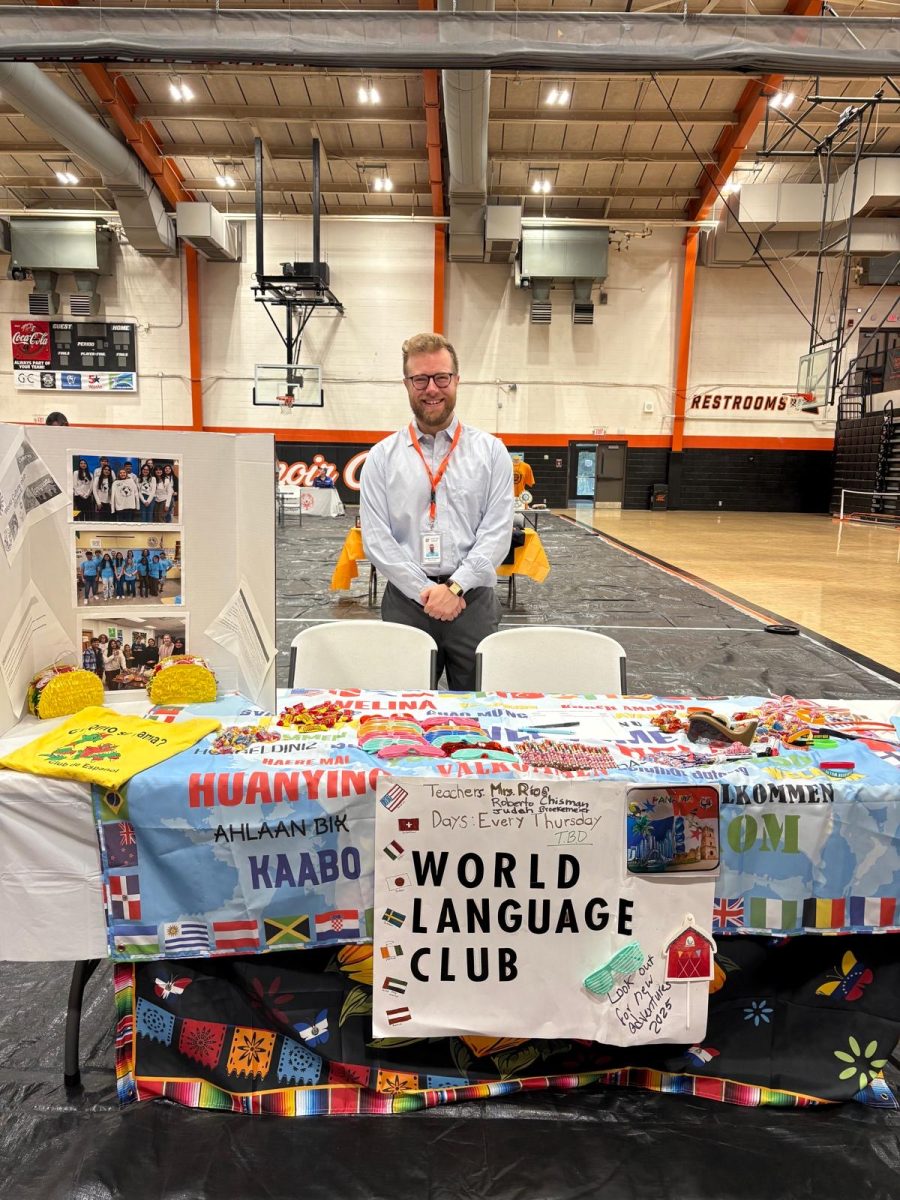
E-sports isn’t just about reflexes, strategy, or mechanical skill. At the highest level, it’s a battle of the mind. With the newly introduced E-Sports Team, Matthew Baldwin chose his first set of players by allowing anyone to join.
“Since it’s a new program, we just opened it up and whoever showed up, I picked. I have been listening to players who think certain students are good and scout out for them,” Baldwin said.
Since the team is still fairly recent and didn’t have the most structured beginning, some people might ask how Baldwin fosters teamwork and communication among players.
“Encourage them to play together outside of school to figure out what works for them,” Baldwin said.
In traditional sports, coaches can call time-outs, adjust tactics on the fly, and directly communicate with players during breaks. E-sports, however, demands a different approach to develop and adapt game strategies.
“It’s different from actual sports since I can’t do anything like calling time-outs, so standing behind them and offering advice as I can,” Baldwin said.
This means relying on real-time observation, quick decision-making, and trust in the players’ ability to adapt. The strategy isn’t just about in-game tactics, it’s about preparing the team to think critically under pressure and make split-second adjustments without direct intervention. While victories are the ultimate goal, Baldwin emphasized that success is measured in intangibles.
“On wins and losses, communicating, cooperating and a team win over a personal win,” Baldwin said.
A team that communicates effectively, supports one another, and prioritizes collective achievement over individual accolades is one that builds a strong foundation for long-term success. These qualities often translate into better performance and a more resilient mindset, even in challenging matches. Every team needs both immediate targets and a broader vision.
“The long-term goal is to build a sustainable program here and a winning legacy. The short-term goal is to play for a championship,” Baldwin said.
The short-term focus keeps the team motivated and hungry for success, while the long-term vision ensures that every decision—whether in recruitment, training, or competition—aligns with building something enduring. A championship run is a milestone, but a legacy is what lasts. No team is immune to slumps or tough losses, and it’s necessary to acknowledge the importance of resilience.
“Luckily, we haven’t had a lot of those so far, but try to motivate them and remind them of the positives,” Baldwin said.
Even in the absence of frequent setbacks, preparation for adversity is key. By focusing on the positives—whether it’s individual growth, team chemistry, or lessons learned—the team can maintain momentum and confidence. Milestones serve as both motivation and proof of progress. One such moment for this team was:
“Making the final four because it showed that we can play really well together,” Baldwin said.
Reaching the final four wasn’t just about skill; it was a testament to the team’s ability to collaborate, adapt, and perform under pressure. It proved that their efforts in strategy, communication, and unity were paying off. Despite its growth, e-sports still faces hurdles, particularly in legitimacy and logistics. Baldwin highlighted two major challenges:
“As a whole, getting acknowledged as a sport by the TSSAA. I also have players with overlapping schedules due to other sports, so scheduling is a challenge,” Baldwin said.
Recognition by organizations like the Tennessee Secondary School Athletic Association (TSSAA) would provide E-sports teams with the same opportunities and respect as traditional sports. Additionally, balancing E-sports with other athletic commitments adds complexity to scheduling practices and competitions. Baldwin is optimistic about the trajectory of E-sports, especially as institutions begin to embrace it:
“I think it’s going to continue to grow as colleges start recognizing it as a sport and I hope for TSSAA to recognize it as a sport in Tennessee,” Baldwin said.
As more colleges and high schools recognize E-sports as a legitimate athletic endeavor, opportunities for scholarships, structured competition, and institutional support will expand. The hope is that Tennessee will follow suit, providing a clearer path for young E-sports athletes to develop their skills and pursue their passion. E-sports may not have time-outs, but it thrives on strategy, adaptability, and teamwork. Behind every match is a coach who not only devises game plans but also cultivates a culture of collaboration and resilience. With clear goals, a focus on both short-term achievements and long-term legacy, and a commitment to overcoming challenges, programs like this one are paving the way for E-sports’ future. As recognition grows and scheduling challenges are addressed, the potential for e-sports to become a mainstream athletic pursuit becomes even more promising. For now, teams like this one continue to prove that E-sports is more than just a game—it’s a platform for building legacies.