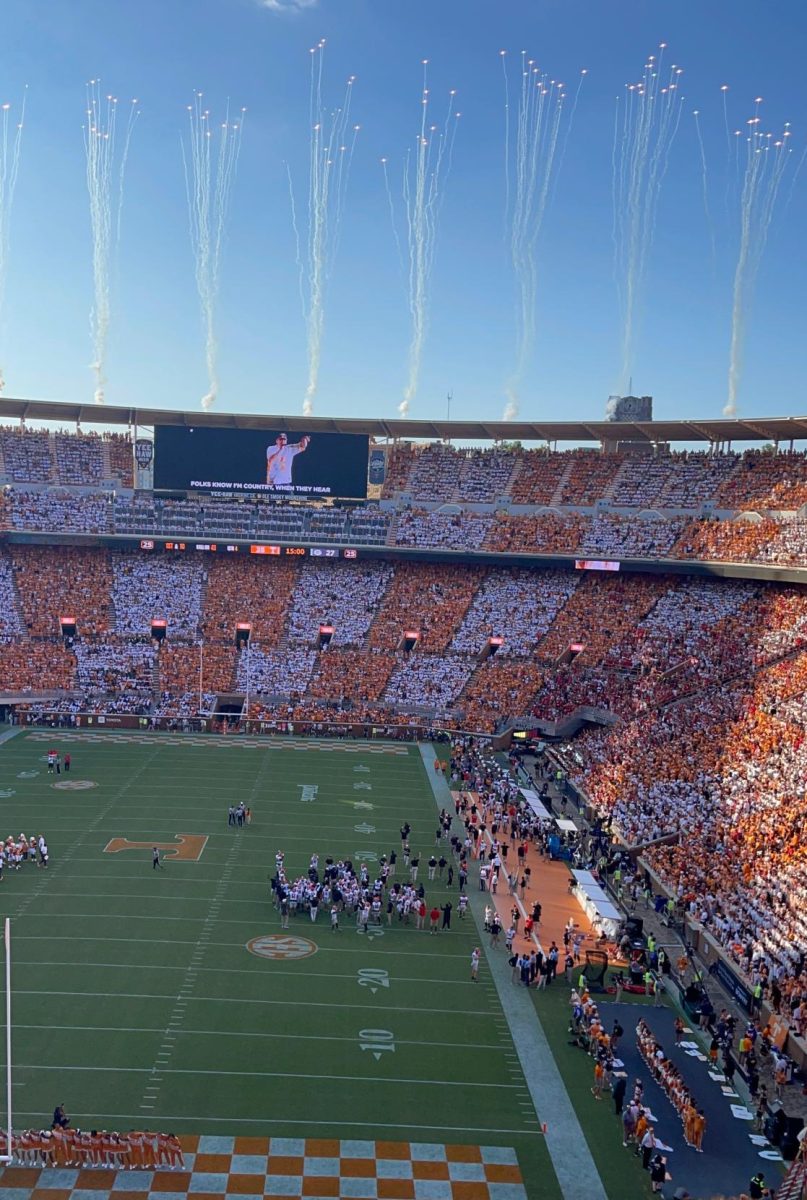
Ohio State’s 27–9 victory over Michigan didn’t just settle another chapter in college football’s most storied rivalry—it stirred emotions, arguments, celebrations, and frustrations throughout the student body. After four straight years of watching Michigan come out on top, this year’s result flipped the script and immediately sparked conversations about momentum, expectations, and the future of The Game. For many students, the matchup wasn’t just another Saturday. It was a measuring stick for pride, loyalty, and bragging rights that will last all year. Michigan fan Elijah Smith (11) didn’t hide his disappointment.
“I was lowkey kinda sad, not too surprised, but disappointed,” Smith said.
His reaction reflected the mood of many Michigan supporters who had grown used to their team’s recent success and hoped the streak would continue. Meanwhile, Ohio State fan Gabriel Atwell (12) had a completely different experience on game day. For him, the victory was more than a score—it was relief, validation, and a long-awaited return to superiority in the rivalry.
“It felt great after four straight years of losing to finally get the win,” Atwell said.
Opinions varied widely on whether the game unfolded the way students thought it would. Smith admitted he didn’t have a clear prediction going into the matchup.
“I [didn’t] really know what to expect from that game; it could really go either way,” Smith said.
Atwell, however, spoke with confidence. His certainty echoed the optimism many Ohio State fans carried into the weekend, convinced that this year’s roster had the talent to reclaim the rivalry.
“It [played out like I thought it would], we definitely have the better team,” Atwell said.
When it came to identifying the turning point of the game, the two students saw things a little differently. Smith pointed to a broader shift in energy.
“The second quarter really changed the direction of the matchup,” Smith said.
Atwell highlighted a specific moment that, in his view, solidified Ohio State’s momentum and set the tone for the rest of the contest.
“[The turning point was] the Jeremiah Smith touchdown,” Atwell said.
Both students agreed that Ohio State’s receiving corps stood out as the most impressive part of the game. Smith chose Jeremiah Smith as his standout player, and Atwell agreed, complimenting the receiving corps’ catching abilities. Their shared appreciation for the Buckeyes’ receivers showed that, regardless of allegiance, talent on the field tends to speak for itself.
Even before the game settled into its final rhythm, the first quarter caught both students off guard. Smith and Atwell were both surprised at Michigan’s early lead, sparking hope for fans like Smith, only to fade as Ohio State’s performance strengthened throughout the game.
The outcome didn’t just stay on the field—it followed the students throughout the rest of their day. Smith and Atwell’s reactions convey a simple but honest reflection of how deeply the rivalry can affect fans emotionally. Smith was disappointed, but for Atwell, the victory carried excitement and positivity far beyond the final whistle.
“Overall, I was really bummed,” Smith said.
“After the win, it lifted my mood for the rest of the day,” Atwell said.
Both students also offered their thoughts on what their respective teams need to improve moving forward. Smith pointed to consistency as an issue, and Atwell acknowledged that even in victory, there were areas for Ohio State to clean up.
“[Michigan needs to focus on] keeping the momentum we had and not get lazy,” Smith said.
“Both sides of the ball played great, but we need to limit those explosive plays,” Atwell said.
The rivalry holds personal significance for both students, though in different ways. In many ways, their reactions reflect how The Game functions like a holiday—one filled with traditions, memories, and expectations. Family and friend involvement in the rivalry varied as well.
“Family-wise, really just me and my dad care, friend-group-wise, just me and my buddy Logan pay attention to the game,” Smith said.
“Part of my family is from Ohio, so it’s huge,” Atwell said.
Their experiences show how The Game often becomes not just a college football tradition but a personal or family identity. Despite the emotional highs and lows, neither student felt that the rivalry itself had changed because of this year’s outcome.
“Not really, it’s still competitive as it was five years ago,” Smith said.
“It didn’t really change, there is always tension every year,” Atwell said.
Even with Ohio State reclaiming momentum, the rivalry remains fierce and deeply rooted. However, when discussing momentum moving forward, both students believed Ohio State may be entering a new multi-year stretch of dominance.
“It could really go either way, but Ohio State is about to go on a couple-year run, I think,” Smith said.
“Yeah, for sure, I think Ohio State’s going to win a few years in a row,” Atwell said.
Expectations for the future differed sharply.
“I don’t really have an expectation,” Smith said.
“For this season, I expect to win the Big Ten championship and win the natty back to back,” Atwell said.
These contrasting viewpoints illustrate the emotional divide that defines the rivalry: hope on one side, confidence on the other.
In the aftermath of the 27–9 victory, one thing is clear—The Game remains one of the most emotionally charged, culturally important, and personally meaningful events of the year for students, families, and fans alike. The rivalry lives on, fueled by passion, tension, pride, and the certainty that next year’s matchup will be just as explosive.
Image Source: https://www.aol.com/articles/did-ohio-state-football-grade-232411412.html